ABOUT THE PROGRAMME
The aim of the study program "Aircraft Systems Engineering" is to prepare specialists in the field of aeronautical engineering who are able to solve problems of aircraft mechanical and electronic systems operation, applying theoretical knowledge and modern methods and tools corresponding to technological progress in a constantly changing environment and seeking improvement related to the change of professional activity.
WHY CHOOSE AIRCRAFT SYSTEMS ENGINEERING STUDY PROGRAM?
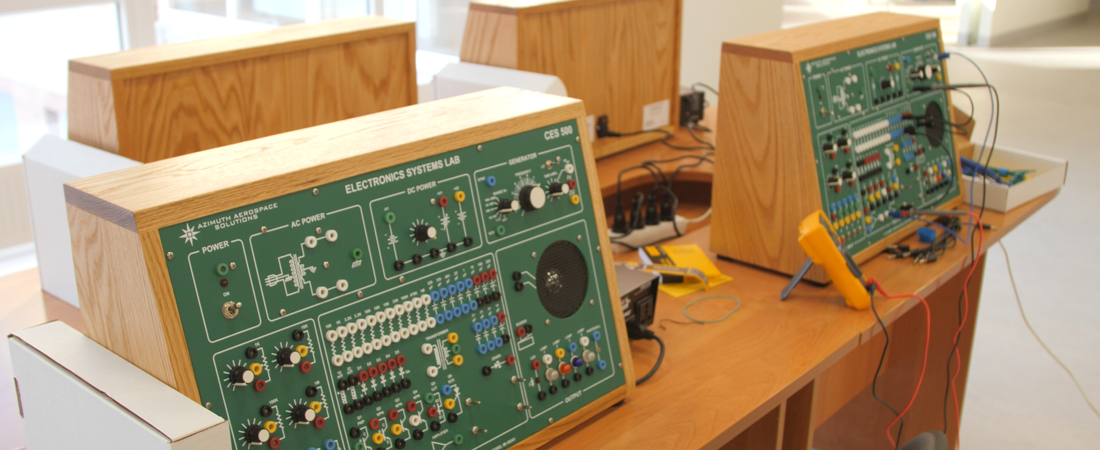
The program is focused on practical activities, its content is based on the real needs of the qualification of an aviation mechanics and avionics engineer. Studies are implemented in a concentrated and intensive manner, practical skills are formed in modern laboratories and, on the basis of consolidation, in the base of social partners.
The lecturers are specialists in their field; each subject is taught by lecturers with specific knowledge in the field of aeronautical engineering.
The opportunity to gain international experience is provided under the Erasmus+ exchange program.
Sustainable Development Goals









By choosing AIRCRAFT SYSTEMS ENGINEERING study program, students will have the opportunity to study under the Erasmus+ student mobility program at higher education institutions in Austria, the Czech Republic, Denmark, Estonia, Latvia, Poland, Germany, Hungary, Malta, Portugal and Turkey, as well as to perform Erasmus+ traineeships at foreign companies.
Graduates who have obtained professional bachelor's degree in aeronautical engineering will be able to work in Lithuanian and foreign civil aviation companies, military air forces and the internal affairs system, air transport companies as aircraft continuing airworthiness maintenance specialists, as well as in state institutions ensuring flight safety, airports and their divisions and other companies that require aeronautical mechanics/avionics engineers and technicians.
Persons seeking to obtain a license take an exam at the Transport Competence Agency (https://tka.lt/) or in accordance with Commission Regulation (EU) No 2014/26 of 26 November 1321/2014 on the continuing airworthiness of aircraft and aeronautical products, parts and appliances, and on the approval of organisations and personnel performing these tasks (OJ L 362, 17.12.2014, p. 1) in a maintenance training organisation approved in accordance with Part 147 of Regulation (EU) No 1321/2014.
The alignment of the Aircraft Systems Engineering study programme with EASA Part-66 knowledge modules is presented in Table 1 below. The overall level of alignment is 93.5%, demonstrating a high degree of compliance with the Part-66 knowledge requirements.
Student's practical experience acquired during the study process, performing practical tasks during internships in aviation companies or air transport companies is confirmed by the entries in the "Student's Practical Work journal". Entries in the journal are made by 2 categories of persons: The student, who is the owner of the log; Approver - a person with the appropriate professional qualification or a licensed authorized aircraft maintenance engineer supervising.
Table 1. Alignment of the Aircraft Systems Engineering Study Programme with EASA Part-66 Knowledge Modules
| Module No.0 | EASA Part-66 Modul | Alignment (%) |
| 01 | Mathematics | 100 |
| 02 | Physics | 100 |
| 03 | Electrical Fundamentals | 93 |
| 04 | Electronic Fundamentals | 100 |
| 05 | Digital Techniques / Electronic Instrument Systems | 85 |
| 06 | Materials and Hardwar | 85 |
| 07A | Maintenance Practices | 87 |
| 08 | Basic Aerodynamics | 100 |
| 09A | Human Factors | 100 |
| 10 | Aviation Legislation | 100 |
| 11A | Turbine Aeroplan Aerodynamics, Structures and Systems | 85 |
| 11B | Piston Airplane Aerodynamics, Structures and Systems | 88 |
| 12 | Helicopter Aerodynamics, Structures and Systems | 90 |
| 13 | Aircraft Aerodynamics, Structures and Systems | 85 |
| 14 | Propulsion | 87 |
| 15 | Gas Turbine Engine | 100 |
| 16 | Piston Engine | 98 |
| 17A | Propeller | 100 |
93.5
Detailed mapping of EASA Part-66 submodules to the corresponding study programme modules is available upon request via the following link.
Students are awarded a Professional Bachelor's degree in Engineering upon completion of their studies and successful defense of graduation thesis. Graduates can continue their studies and obtain a master’s degree.
Citizens of Lithuania or other member countries of the European Union (EU) or European Economic Area (EEA) and their family members, non-EU and non-EEA nationals granted a right of permanent residence in Lithuania, stateless persons and Lithuanian nationals residing abroad can apply through the LAMA BPO information system and can be accepted to the state-funded study places or claim for scholarships in accordance with the procedures established by the applicable legislation.
Applicants who do not meet the criteria can apply to self-funded studies. Tuition fees for the following intake are listed here.
LIK has one intake per year for studies commencing from September 2nd.
Citizens of Lithuania or other member countries of the European Union (EU) or European Economic Area (EEA) and their family members, non-EU and non-EEA nationals granted a right of permanent residence in Lithuania, stateless persons and Lithuanian nationals residing abroad can apply through the LAMA BPO information system.
Applicants who do not meet the criteria listed above can apply to LIK directly. The steps of the direct application process are explained here.
If you have questions regarding admissions, email us at admission@lik.tech
IMPORTANT LINKS
SPECIALISATIONS WITHIN THE STUDY PROGRAMME
Aircraft Maintenance of Mechanisms
- Aircraft maintenance and repair of mechanical units
- Gliders
- Aircraft Hydraulic and Pneumatic Systems
Aircraft Electronic Equipment Maintenance
- Aircraft Electronic Equipment Maintenance and Repair
- Unmanned Aerial Vehicles
- Avionics Systems
Unmanned Aerial Vehicles
- Fundamentals of Unmanned Aerial Vehicle Design
- Programming of Unmanned Aerial Vehicle Control Systems
- Unmanned Aerial Vehicle Control and Monitoring Systems
COURSE STRUCTURE
| YEAR I |
SEMESTER I |
ECTS |
| Mathematics 1 | 3 |
| Physics | 6 |
| Information Technologies | 3 |
| Aviation Materials | 6 |
| Mechanics | 6 |
| Fundamentals of Electrical Engineering and Electronics | 6 |
| YEAR II |
SEMESTER III |
ECTS |
| Foreign Language 2 | 3 |
| Artificial Intelligence | 3 |
| Aircraft Functional Systems/Microprocessors | 3 |
| Non-Destructive Control Technologies 2 | 6 |
| Aircraft Engines and Fuel Systems/Aircraft Computer Systems | 6 |
| Fundamentals of Aerodynamics | 6 |
| Elective Subject (can be chosen) | 3 |
SEMESTER IV |
ECTS |
| Fundamentals of Law, Sustainable Development, Business Ethics and Business Communication (elective) | 3 |
| Aircraft Technology Internship | 18 |
| Specialisation Subject 1 | 6 |
| Elective Subject (can be chosen) | 3 |
| YEAR III |
SEMESTER V |
ECTS |
| Aviation Law | 3 |
| Business Economics and Management | 3 |
| Aircraft data buses and sensors | 6 |
| Aircraft Helicopters/ Aircraft electric motors | 3 |
| Semester Work | 6 |
| Specialization subject 2 | 3 |
| Specialization subject 3 | 6 |
SEMESTER VI |
ECTS |
| Environment and Human Safety | 3 |
| Human Factor in Aviation Engineering | 3 |
| Aircraft Navigation Systems/ Communication systems and remote control | 6 |
| Final Internship | 6 |
| Professional Bachelor Graduation Thesis | 9 |
| Elective Subject (can be chosen) | 3 |