This measure is designed to strengthen the competitiveness of R&D results by creating favourable conditions for spin-off companies to successfully transform prototypes into market-ready innovative products. Lietuvos inžinerijos kolegija HEI, together with its spin-off company UAB “LIKTECH SOLUTIONS”, will work towards the joint project objective: to commercialise the prototype of the Automatic Wire Feeding System for Laser Welding (LAVPS Pro) developed at LIK HEI and to obtain evaluation and feedback from potential customers. The developed prototype, “LAVPS Pro”, is a push-principle automatic wire feeding system designed for precise industrial processes such as laser welding, 3D printing, and metal additive manufacturing.

Project Duration: December 2025 – December 2027

Total Budget: €150,000

EU Funding: €150,000

The programme for 2022–2030 is administered by the Ministry of Education, Science and Sport of the Republic of Lithuania. The funding source consists of EU Funds and co-financing resources.

Project: Talent Inflow 4 Digital Minds (TI4DM), Nr. 2025-1-RO01-KA220-HED-000355192

Funding Programme: Erasmus+

Participants: Constantin Brâncuși University of Târgu Jiu (Romania), Instituto Politécnico de Santarém (Portugal), Goce Delčev University Štip (Republic of North Macedonia), Lietuvos inžinerijos kolegija HEI (Lithuania).

Start Date: 1 September 2025
End Date: 31 August 2027

Total Budget: €400,000.00

Project Objectives:

  • To improve the digital literacy and professional skills of more than 600 learners.

  • To bridge the gap between higher education and the labour market by connecting 40 local employers with digitally educated young people.

  • To enhance the quality of academic teaching by providing academic development opportunities for higher education staff.

  • To develop accessible learning resources designed to support students, including those from disadvantaged socio-economic backgrounds.


NORDPLUS Project:

“Application of Green Care Concept Elements for Personal Well-Being”

Project No.: NPHE-2025/10288

Participants: Kauno kolegija – Lead Partner, Estonian University of Life Sciences (Estonia), TTK University of Applied Sciences (Estonia), Lietuvos inžinerijos kolegija (Lithuania), Savonia University of Applied Sciences (Finland), Riga Stradins University (Latvia).

Project Budget: €81,485 (100% funded by the Nordic Council of Ministers)

Project Duration:

Start Date: 1 January 2025
End Date: 1 January 2026

Project Objective: The health and social care sectors require alternatives to traditional treatment, therapy, rehabilitation, and vocational training approaches. In response to the changing social environment, conventional therapies can be effectively complemented by innovative practices. One such approach is forest therapy, actively developed and applied by lecturers Vaida Vaitkutė Eidimtienė and Linas Daubaras from the Faculty of Environmental Engineering at LIK HEI.

For this reason, Lietuvos inžinerijos kolegija HEI was invited to join the project consortium. Through collaboration, partners agreed that the Green Care concept should be further explored and integrated into the learning process within partner institutions as an innovative, effective, economical, environmentally friendly, and attractive approach.

Green Care involves the use of forestry, farming environments, biotic and abiotic natural elements, and specialised psychological practices for health-promoting activities. This concept serves as a framework for improving mental and physical health and enhancing overall quality of life.

The overarching objective of the network is to educate flexible and open-minded professionals across various fields who are capable of contributing to the development, promotion, and implementation of the Green Care concept.

For more information: linas.daubaras@lik.tech

Project: “Restructuring Unproductive Forest Stands to Enhance Forest Climate Adaptation and Improve Carbon Dioxide Sequestration in Forests” No.: 23PA-KK-24-1-08015-PR001

Staff from the Department of Forestry (KMAIK), led by Assoc. Prof. Dr. Albinas Tebėra, have prepared a project proposal entitled “Promoting Cooperation among Private Forest Owners through Joint Modernised Forest Management Plans” (Project No.: 23PA-KK-23-1-05568-PR001) for implementation under the Knowledge Transfer and Information Activities focus area of the Measure: Support for Demonstration Projects and Awareness-Raising Activities within the Lithuanian Rural Development Programme 2014–2020.

According to Order No. 4D-95 (1.8 E) of the Chancellor of the Ministry of Agriculture of the Republic of Lithuania, dated 22 April 2024, funding of up to €98,613.00 has been allocated for the implementation of this project. Of this amount, up to €83,821.05 (85%) will be provided from the European Agricultural Fund for Rural Development, and €14,791.95 (15%) will come from the Lithuanian State Budget.

Relevance of the Project Topic

Private forest ownership in European countries accounts for a significant share of forest resources, yet the structure of private forest holdings is highly heterogeneous. The size of private forest properties varies from less than 1 ha to over 10,000 ha. The average private forest holding in EU countries is approximately 13 ha. However, the majority of private owners—around two-thirds—hold less than 3 ha. In Lithuania, private forests cover 929,000 ha (42.2% of the country’s forest area), managed by over 255,000 private forest owners, with an average holding of 3.4 ha per owner.

Managing modern forestry, implementing advanced technologies, and improving forest condition on such small holdings is challenging. The most effective approach to organise a more modern and rational forestry operation and enhance private forest resources and condition is through the development of cooperation in private forestry. In Lithuania, only 0.1% of private forest owners are members of cooperative associations, making the promotion of cooperative processes in private forestry a highly relevant issue. Different EU countries apply various approaches to stimulate cooperation, including state investments in cooperative establishment or associations, and the expansion of advisory, training, and education programmes for forest owners. While these measures accelerate cooperation, their impact remains insufficient. A new, effective approach to develop cooperation is to encourage forest owners to jointly prepare forest management plans. By consolidating the forest management projects of a group of owners, it becomes evident that coordinating key forestry operations outlined in these plans—such as stand thinning, forest restoration, and stand shaping—can reduce operational costs and enable the joint sale of timber products at higher prices.

Another challenge in private forestry is improving forest productivity and condition. The actual productivity of forests in various EU countries is only around 60–85% of their potential. In Lithuania, the productivity of mature and maturing private forest stands could be increased by approximately 20%, with even greater gains in their value. Forest cultivation, condition monitoring, and resource management are complex tasks. Currently, private owners must independently address these issues to enhance management efficiency. This requires extensive specialised knowledge and practical experience, which most owners lack, leaving these issues largely unresolved. Under such circumstances, it is highly relevant to provide forest owners and forestry service companies with practical and easily implementable tools and measures to significantly modernise operations on their holdings, while simultaneously improving the country’s forest resources and enhancing their conservation and environmental value.

Objective of the Demonstration Trial

Using the digital technology “Smart Forester”, the project aims to develop modernised forest management plans for private forest holdings that promote cooperation among forest owners and enable more efficient forest management.

Innovative Solution and Project Novelty

Private forest owners currently implement silvicultural measures—such as stand thinning, regeneration, and stand shaping—according to Forest Management Plans prepared in line with the Forest Management Work Execution Instructions. These operational measures primarily regulate the scope of activities (e.g., intensity of thinning and timely forest regeneration) to ensure compliance with the Forestry Law and other forestry regulations. However, conventional forest management plans do not consider alternative measures, do not analyse their economic efficiency, overlook the balance of volume increment and utilisation, and fail to forecast the potential impact of planned measures on the long-term development and condition of forest resources. Additionally, the plans do not assess environmental benefits or the influence of the measures on GHG accumulation intensity. All of these issues can be addressed by applying the newly developed digital technology “Smart Forester”. The primary goal of this technology is to create the conditions for more efficient use of private forest resources and to enhance the multifunctional value of forests. This innovation will be implemented during the project through the preparation and execution of demonstration trials.

Project Dissemination

The project will establish three knowledge-sharing groups among participants to exchange practical forestry experience. For their forest holdings, 12 modernised demonstration forest management plans will be prepared. To disseminate the project results, it is planned to organise 5 seminars and 12 field days for forest owners and employees of forestry companies.

Project Duration: 24 months (April 2024 – April 2026)

Project Activities

Informational Articles:
The role of forests in stabilising climate change
Monitoring the productivity of private forests
Balance of volume increment and utilisation in private forest stands


PROJECT: ENHANCING URBAN RESILIENCE WITH CLIMATE ADAPTIVE GREEN SPACE PLANNING IN LATVIA AND LITHUANIA (GREENURBANADAPT) LL-00273

Project Budget: €217,128.00 (of which €173,702.40 is co-financed by the ERDF – European Regional Development Fund)

Participants: Latvia University of Life Sciences and Technologies, Lietuvos inžinerijos kolegija HEI

Start Date: 01/04/2025
End Date: 31/03/2027

Project Objective: The project aims to increase the number of specialists in the design, implementation, and maintenance of green urban spaces working in the Latvia–Lithuania programme area, ensuring that they understand and apply innovative, research-based solutions for climate-adapted urban greenery. This will support local authorities in better integrating EU environmental strategies into urban planning and design.

The project will involve universities from Latvia and Lithuania, facilitating knowledge exchange and promoting a cross-sectoral approach. Activities will focus on selecting appropriate plant species for urban areas and creating green systems rich in biodiversity. Project partners will develop and test a training programme, produce a guide, and provide this methodological material to municipal authorities and sector specialists. Additionally, education and public awareness will be enhanced using a newly established demonstration site in Jelgava and animated infographic videos.

Project Novelty: The project introduces a plant assortment specifically adapted to climate-resilient urban green spaces, a practice not previously applied in Latvia or Lithuania. This initiative will contribute to the development of greener, more resilient cities and increase public awareness of the importance of sustainable urban greenery.

Project: “Restructuring Unproductive Forest Stands to Enhance Forest Climate Adaptation and Improve Carbon Dioxide Sequestration in Forests” No.: 23PA-KK-24-1-08015-PR001


The project is implemented under the Demonstration Projects and Awareness-Raising Activities measure of the 2023–2027 Strategic Plan for Agriculture and Rural Development of Lithuania.

The project is co-financed by the European Agricultural Fund for Rural Development and the Lithuanian State Budget.

Project duration: 24 months (March 2025 – March 2027)

Project Novelty: 

This project introduces a novel approach to the management of unproductive forest stands to enhance their capacity for carbon dioxide sequestration and improve their resilience to climate change. Previously, the primary focus was on productive forests, while unproductive stands were largely neglected. This project draws on the latest scientific research and applies, for the first time in Lithuania, a methodology enabling the transformation of non-productive, sparse, and structurally inferior stands into mixed, multi-aged, and denser forests that more efficiently store CO₂ in biomass.

Innovative solutions will be tested in demonstration trials, including optimal stand density determination, development of planting composition schemes, introduction of polar species, and efficiency evaluation. These measures are based on a methodology specifically adapted to Lithuania’s unproductive forest stands.

The project also seeks to implement proven international forestry strategies, transitioning from monoculture forests to mixed, climate-resilient stands. This approach fosters a new quality of forestry that integrates carbon sequestration, forest resilience to climate challenges, and economic benefits for forest owners.

Objective of the Demonstration Trial:

To demonstrate methods for restructuring unproductive forest stands that mitigate climate change by increasing stand productivity and maximizing CO₂ accumulation in biomass.

Expected Results and Dissemination:

The project aims to create knowledge-sharing groups among participants to exchange practical forestry experience. Eight demonstration trials will be established on private forest owners’ land, following a specially developed methodology for implementing advanced technologies, scientific innovations, and progressive forestry practices. Dissemination of the project results will be conducted through seminars, field days, and other awareness-raising activities.

For more information, contact: dovile.gustiene@lik.tech

Project “Application of Advanced Technologies for the Assessment of Waterlogged Land to Promote Farmers’ Cooperation in Lithuania” No. 23PA-KK-24-1-07949-PR001

The project is implemented under the intervention measure “Demonstration Projects and Information Activities” of the Lithuanian Agricultural and Rural Development Strategic Plan 2023–2027.

The project is financed by the European Agricultural Fund for Rural Development and the State Budget of the Republic of Lithuania.

Project implementation period: 24 months (March 2025 – March 2027)

Project Innovation: 

This project introduces an innovative solution in Lithuania – the assessment of waterlogged land and the condition of drainage systems using advanced digital technologies. Data on land condition will be collected using unmanned aerial vehicles (drones) equipped with RGB and thermal cameras, high-precision GPS receivers, and LiDAR-based scanning technologies. These tools will enable the identification of problematic areas with very high accuracy – up to 1.5 cm resolution.

The collected information will be integrated with soil moisture sensor data and processed on cloud-based platforms, enabling real-time decision-making regarding the maintenance or upgrading of drainage systems. This approach eliminates the need for costly and time-consuming geodetic surveys, ensuring that data are both more accurate and more timely.

During the project, farmers will be trained to use these datasets, helping to reduce the digital divide and strengthen their capacity to work with advanced technologies. This will improve the management of waterlogged land, promote the sustainable use of soil resources, reduce climate impact, and encourage sustainable farming practices.

The objective of the demonstration trial is to promote farmers’ cooperation and the use of advanced technologies to ensure efficient monitoring of waterlogged land and drainage systems.

Expected Results and Dissemination:

The project will establish farmer peer-learning groups to facilitate the exchange of practical farming experience among participants. Ten demonstration trials will be implemented on farmers’ holdings in accordance with the prepared demonstration methodology aimed at introducing technological innovations, scientific advancements, and best practices. To disseminate project results, seminars, field days, and other communication activities will be organised.

For further information, please contact: sinilga.cernuliene@lik.tech

UAB “AI Finansų Valdymas”, together with its partner Lietuvos inžinerijos kolegija HEI, is implementing the project “An Artificial Intelligence-Based Solution for Processing Primary Accounting Data and Generating Reports”.

Project Objective: 

The objective of the project is to develop an AI-based solution for financial data processing, accounting automation, and the optimisation of tax analysis processes. Project implementation will accelerate innovation and enable the achievement of a high level of technological readiness — advancing from the current Technology Readiness Level (TRL) 4 to TRL 8 through the development of a fully functioning AI solution prototype. The company’s activities focus on the automation of work processes and increasing operational efficiency. AI technologies enable automated data entry, analysis of large data sets, identification of trends, and the generation of accurate financial reports. Such solutions reduce the likelihood of errors, save time, and free up specialists’ resources for more complex tasks. Through the implementation of this project, the company aims to strengthen its market position and compete internationally by offering faster, more accurate, and cost-effective services in the financial sector.

The project is implemented under the 2022–2030 Development Programme managed by the Ministry of the Economy and Innovation of the Republic of Lithuania, within the Economic Transformation and Competitiveness Development Programme progress measure No. 05-001-01-05-07 “Establish a Coherent System for the Promotion of Innovative Activities”. It falls under the activity “Promote the Attraction of Foreign Direct Investment in Research and Experimental Development”, sub-activity “Promote High Value-Added Foreign Direct Investment: Implementation of Research and Experimental Development, Cooperation and Technology Transfer between Large Enterprises and Micro, Small and Medium-Sized Enterprises in the Fields of Technology and Innovation (Central and Western Lithuania Region)”.

Total budget: EUR 1,336,553.51
EU funding allocated: EUR 771,607.57

The project is co-financed by the European Union.

Start date: 10 March 2025
End date: 10 March 2028

The project is implemented under the intervention measure “Demonstration Projects and Information Activities” of the Lithuanian Agricultural and Rural Development Strategic Plan 2023–2027.

The project is financed by the European Agricultural Fund for Rural Development and the State Budget of the Republic of Lithuania.

Project implementation period: 24 months (March 2025 – March 2027)

Project Innovation:

The spraying of silicone-based products on agricultural crops is not yet widely applied in Lithuanian farms; however, it represents a potentially effective and innovative solution addressing a range of agricultural and environmental challenges. These silicon-based products differ from traditional fertilisers in that they enhance plant health by forming a protective layer on leaves and stems, improving resistance to pests, diseases, and abiotic stress factors such as drought and salinity. The introduction of this bio-additive in Lithuanian agricultural holdings would represent a novel approach, integrating advanced materials and knowledge into agricultural practice and delivering greater benefits than conventional measures such as irrigation and chemical fertilisers.

The use of silicone-based bio-additives in Lithuanian farms is expected to improve the control of soil hydrophobicity and enhance water retention capacity. At the same time, these bio-additives will increase crop water-use efficiency by reducing evaporation from the soil surface and maintaining optimal soil moisture levels throughout the growing season. Furthermore, their application will contribute to sustainable farming practices by reducing overall water demand in agriculture, helping to preserve freshwater resources and reduce the carbon footprint of agricultural production.

The objective of the demonstration trial is to assess the potential of silicon-based bio-additives/silicones to reduce CO₂ emissions and mitigate plant stress caused by drought through controlled evapotranspiration.

Expected Results and Dissemination. Eight demonstration trials will be established. To disseminate project results, five seminars and eight field days will be organised. In addition, four farmer peer-learning groups will be formed to facilitate the exchange of practical farming experience among project participants.

For further information, please contact: gitana.vyciene@lik.tech

Project: AI-based Chatbot GPT Integration Coaching Toolkit – ARTIFIGEN – 2024-1-CY01-KA220-HED-000256806

Funding Programme: Erasmus+

Partners: Geoimaging Limited (Cyprus), Polytechnic Institute of Santarém (Portugal), Aristotle University of Thessaloniki (Greece), Lietuvos inžinerijos kolegija HEI (Lithuania), Thinkplus Consulting, Lda (Portugal).

Start date: 1 December 2024
End date: 30 November 2026
Total budget: €250,000

Project Objective: The objective of the ARTIFIGEN project is to integrate AI-based chatbots into higher education in order to promote personalised learning, support academic staff in applying advanced digital tools, and strengthen community engagement. The core project activities include: analysis of user needs, assessment of ethical aspects related to the use of artificial intelligence in education, development and testing of AI-based teaching and learning tools, dissemination of project results. The project will deliver an online platform integrating various AI chatbots, a collaborative workspace, and comprehensive platform usage guidelines ensuring the responsible application of artificial intelligence in education.

The project is implemented under the Lithuanian Rural Development Programme 2014–2020, under the measure “Knowledge Transfer and Information Activities”, activity area “Support for Demonstration Projects and Information Activities”.

The project is financed by the European Agricultural Fund for Rural Development and the State Budget of the Republic of Lithuania.

Project implementation period: 2023–2025

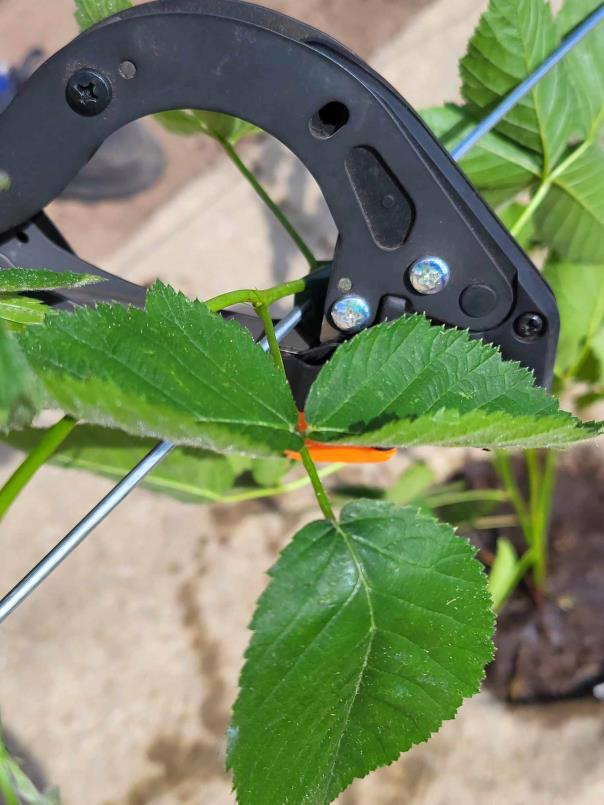
Through the implementation of this project, farmers will be encouraged to take an interest in environmentally sustainable technologies that reduce the use of herbicides and promote soil conservation. The project will also promote the cultivation of blackberries in Lithuanian farms, foster the development of berry farming businesses, and disseminate the principles of sustainable farming. Ten demonstration trials will be established in different locations.


Project: Development of Engineering Sciences in Higher Non-University Education Institutions in Lithuania: Establishment of the Lietuvos inžinerijos kolegija

Project Number: 10-019-P-0005

Project Implementer: Lietuvos inžinerijos kolegija HEI

Project End Date: 30 April 2026 (project extended by 4 months)

Total Eligible Project Costs: €5,439,509.40

EU Funding: €4,515,999.14

Project Objective: To contribute to the improvement of the quality, efficiency, and international competitiveness of Lithuania’s higher education and research system by merging Kaunas Forestry and Environmental Engineering College into Kaunas University of Applied Engineering Sciences (after reorganization, the institution will operate under the name Lietuvos inžinerijos kolegija – LIK HEI).

Project Activities:

12-003-03-04-02-04 Renewal of the college network, taking into account institutional potential, and national and regional economic development and labour market needs.

12-003-03-04-02-04-01 Renewal of the college network, taking into account institutional potential, and national and regional economic development and labour market needs.

The Lithuania 2050 Vision sets out the objective of ensuring a competitive higher education system in Lithuania. In line with this objective, the initiated project foresees the implementation of study infrastructure modernisation activities at KTK and KMAIK, aimed at consolidating engineering-focused studies and applied research activities and preparing for the establishment of Lietuvos inžinerijos kolegija HEI. The implementation of the project activities will have a positive impact on the applicant’s human resources. The planned acquisition of equipment and the organisation of training activities will enable academic staff to apply new teaching methods aligned with labour market needs. The project will also positively affect the applicant’s material resources. Modernisation works will be carried out in the premises managed by the applicant, and the necessary equipment will be procured, contributing to a reduction in the operational costs of the existing infrastructure at KTK and KMAIK. Infrastructure investments – including the upgrading of the study base and the establishment of new laboratories in electronics, smart construction technologies, and smart construction materials – will create the conditions necessary for the implementation of R&D activities and for meeting the requirements applicable to higher education institutions under the Law on Higher Education and Research by 2028. Significant investment in the field of electronics will ensure both the delivery of R&D activities and the enhancement of study quality. Within the newly established institution, interdisciplinarity and sustainability in the context of studies and research will be ensured through a collaborative approach. The consolidated and modernised study programmes will enable the preparation of highly qualified specialists ready to work with the latest technologies. The already implemented short-cycle study programmes (with one additional programme planned on the basis of the studies currently delivered by KMAIK) will help ensure a sufficient number of students.

The project is funded by the Recovery and Resilience Facility and the State Budget of the Republic of Lithuania.

More

Project: “New Microgreen Cultivation Technologies and Their Implementation for Sustainable Farming”
Project No.: 23PA-KK-23-1-05581-PR001

Demonstration Trial Objective: The project “New Microgreen Cultivation Technologies and Their Implementation for Sustainable Farming” is aimed at end beneficiaries, including farmers, their partners, farm employees, and other individuals or legal entities engaged in agricultural activities. The objective is to demonstrate innovative microgreen cultivation technologies that promote sustainable farming practices while producing high value-added agricultural products.

Project Novelty and Relevance: The product (microgreens) and the process (microgreen cultivation technologies) possess fundamentally new characteristics that differ significantly from the products and methods traditionally used by the end beneficiaries. Until now, microgreens have not been widely cultivated in Lithuanian farms as functional foods, nor have innovative cultivation technologies been applied. The distinctive features of the product and process will allow end beneficiaries to gain a competitive advantage. Microgreens will be grown on biodegradable coconut and hemp fibre mats, in vermiculite, and in substrates derived from by-products of local farms. These cultivation technologies have not previously been applied in Lithuanian agriculture. The project will also introduce new microgreen varieties, enabling farms to select the most suitable (optimal) types and achieve optimal yields. This will allow farmers to organise their agricultural operations more efficiently, manage crop production effectively, and gain a competitive advantage through the production of high value-added agricultural products.

The project will have an indirect positive impact on the environment and climate because:

  • No soil resources are used; the nutrient solutions employed are not released into the environment and are reused in subsequent cultivation processes.

  • Closed-loop systems are used for irrigation purposes.

  • Energy is conserved through the use of artificial lighting and an automated irrigation control system, enabling efficient use of energy and water resources.

  • Synthetic fertilisers are not used; peat-based substrates are replaced with alternative organic materials.

  • A zero-waste production approach is implemented (cultivation mats and generated waste are composted, ensuring their reuse in subsequent farm operations), using by-products from local farms.

Project Funding: By the order of the Chancellor of the Ministry of Agriculture of the Republic of Lithuania, dated 22 May 2024, No. BRK-9345, up to €99,990.00 in support is allocated for the implementation of this project, of which funding from the European Agricultural Fund for Rural Development accounts for up to €84,991.50 (i.e., 85% of the total support), and funding from the Lithuanian state budget accounts for up to €14,968.50 (i.e., 15% of the total support).

Expected Results and Project Dissemination: Ten demonstration trials have been established. The results are expected to be applicable and continued in other farms across Lithuania. Following project implementation, it is highly likely that not only the direct beneficiaries involved in the project will apply the measures demonstrated during the trials, but other interested farmers will also adopt these measures. To disseminate the project results, four seminars and ten field days are planned, along with the creation of five groups of project participants for sharing farming experience.

Project Implementation Period: 24 months (April 2024 – April 2026)

Microgreens: Benefits and Nutritional Properties

Sustainable Technologies in Lithuanian Agriculture: Microgreens Cultivation

Innovative Microgreens Cultivation Technologies: Exploring Sustainable Substrates

Video: Sustainable Microgreens Cultivation

Microgreens Cultivation: Effect of Selected Substrates on Growth


“Funded by the European Union – NextGenerationEU, under the ‘New Generation Lithuania’ plan.”

LIK HEI, together with its partners UAB Europos parama and UAB SDL Engineering, is implementing the project “Smart Electric Vehicle Charging Stations Network Traffic Protection System (IEKSTSAS)” No. 08-004-K-0028. The project is being carried out under the 2022–2030 development programme managed by the Ministry of Transport of the Republic of Lithuania, within the progress measure No. 10-001-05-04-01, “Increasing the value created by the transport system and the efficiency of infrastructure utilisation”.

During the project, a network traffic protection system for smart electric vehicle charging stations operating via 5G will be developed. The project will create a universal protection system based on artificial intelligence.

PROJECT INFORMATION:

Project number: No. 08-004-K-0028

Project title: “Network Traffic Protection System for Smart Electric Vehicle Charging Stations Operating via 5G (IEKSTSAS)”

Measure: “Enhancing the Value Created by the Transport System and the Efficiency of Infrastructure Use”

Project implementation period: 4 January 2024 – 31 December 2025

Allocated funding: €832,834.49

Funding source: Funded by the “Next Generation Lithuania” plan under the Economic Recovery and Resilience Plan.


“Funded by the European Union – NextGenerationEU, under the ‘New Generation Lithuania’ plan.”

Lietuvos inžinerijos kolegija HEI, together with its partners UAB Acoris and UAB Elektroninės sistemos, is implementing the project ‘Intelligent Self-Service Platform Based on Artificial Intelligence and 5G’ (No. 08-004-K-0031). The project is carried out under the progress measure No. 10-001-05-04-01 ‘Enhancing the Value Created by the Transport System and the Efficiency of Infrastructure Use’ of the Transport Development Programme, managed by the Ministry of Transport of the Republic of Lithuania for 2022–2030.

The project aims to create a convenient platform for people who want to find entertainment, accommodation, and catering services, book and pay for them, and receive an electronic confirmation that allows them to access the services at the venue without the assistance of staff.

During the development of this platform, the project will address issues related to the latency and responsiveness of IoT (Internet of Things) systems, communication channel bandwidth, cybersecurity, and minimising energy consumption. These aspects are crucial for the platform, as self-service processes involve extensive online communications, including:

  • User identification (e-key for iOS/Android, biometric, card, PIN, QR/barcode) and their location (GPS, QR code),

  • Service reservation,

  • Identification of service type and location (GPS, QR code),

  • Provision of information about the service, service selection, and creation of a service basket,

  • Online payment,

  • Issuing tickets (service confirmations) to the customer and to the point of sale or access control equipment,

  • Remote service provision (activation upon arrival),

  • Monitoring the functionality of the service delivery infrastructure.

A prototype of the self-service platform incorporating artificial intelligence will be developed, and its testing will be carried out on a commercial 5G network in collaboration with telecommunications partners.


Project Information:

  • Project Number: 08-004-K-0031

  • Project Title: Intelligent Self-Service Platform Based on Artificial Intelligence and 5G

  • Measure: “Increasing the value created by the transport system and the efficiency of infrastructure use”

  • Project Implementation Period: 1 February 2024 – 31 December 2025

  • Allocated Funding: €325,314.39

  • Funding Source: Funded under the Recovery and Resilience Plan “Next Generation Lithuania”

UAB Ecococon, together with its partner Lietuvos inžinerijos kolegija, is implementing the project “UAB Ecococon R&D Investment in Environmentally Friendly Technologies”, Reg. No. 02-039-K-0008, under the 2022–2030 development programme managed by the Ministry of Economy and Innovation of the Republic of Lithuania, through the economic transformation and competitiveness development programme’s progress measure No. 05-001-01-04-02 “Encouraging companies to transition towards a climate-neutral economy”, activity “Creating conditions for sustainable SME transformation”, sub-activity “Promoting the development and demonstration of innovative, environmentally friendly (i.e., sustainable) technologies for production in industrial SMEs (Central and Western Lithuania region)”.

Project objective – to develop innovative, sustainable, and environmentally friendly straw panels through research and experimental development. These panels will be used in the production of straw-based boards as well as in other construction, furniture manufacturing, flooring, and related industrial applications, replacing currently used environmentally harmful plywood panels. Only natural and eco-friendly materials, such as straw, gelatin, and potentially hemp fibres, will be used in the production of the product.

The project aims to address the challenges of climate change by reducing the use of forest resources and developing sustainable, renewable construction solutions. This innovation will contribute to climate neutrality and promote the development of more sustainable construction practices.

Project implementation period: 3 October 2024 – 3 April 2027

Project budget: EUR 601,665

EU funding: EUR 444,803, co-financed by the European Union

UAB Ecococon is an innovative company specialising in the development and production of sustainable construction products. The company has created and manufactures a unique modular straw construction system. Its primary goal is to reduce negative environmental impact by developing sustainable, renewable construction solutions that contribute to addressing climate change challenges.

Contact information: Marius@ecococon.lt; +370 637 50000

MB SAI Solutions, together with its partner LIK HEI (Lietuvos inžinerijos kolegija), is implementing a project to develop an innovative product.

Project objective: Based on the concept of a universal foundational model, the project aims to create a product prototype – a business analytics solution enabling users to obtain comprehensive, specific forecasts and insights grounded not only in correlation but also in causality.

Total project value: €1,214,343

EU funding: €891,048

The project is financed by the European Regional Development Fund.

Project duration: June 2024 – June 2026

VšĮ Lietuvos inžinerijos kolegija HEI, together with UAB The Invisible Loudspeaker Company, is implementing the project High Value-Added Products and Technologies in Audio Engineering, co-financed by the European Union through the 2022–2030 development programme managed by the Ministry of Economy and Innovation of the Republic of Lithuania under the Economic Transformation and Competitiveness Development Programme, Measure No. 05-001-01-05-07 “Creating a Coherent Innovation Promotion System.”

The project’s objective is to develop innovative products through R&D activities.

During the project’s implementation, research will be conducted on the development of new high-value-added products and technologies in the field of audio engineering at a global level:

  • Round and rectangular DML speakers with ceramic composite enclosures, designed to address the critical issue of compatibility with surrounding materials, which is essential for “invisible” DML speakers.

  • An intelligent installation and protection system for “invisible” speakers, enabling two main functions: (a) speaker protection, and (b) smart wireless speaker installation.

Project value – €1,600,325.28

EU funding – €1,143,641.33

The project is financed by the European Regional Development Fund

Project duration – 2 January 2024 to 19 June 2026

Project Objective: To develop, implement, and test a reuse and recycling process for cylindrical cell-based electrical energy storage devices, employing advanced battery condition diagnostic technologies and energy-efficient, environmentally friendly mechanical, acoustic, and chemical material disintegration processes.

Implementation Context: The project is carried out under the development programme’s progress measure No. 05-001-01-05-07, “Establish a coherent system to promote innovative activities”, specifically under the activity “Promote the supply of innovations.”

Funding: The project is financed from European Union funds.

Project Budget: €744,089.76
EU Fund Contribution: €563,061.85

Project Duration: July 2024 – July 2026

Project Implementer: UAB D.Z. Capital, in partnership with Lietuvos inžinerijos kolegija HEI.


We are implementing the project “Development of an Innovative Product at UAB ‘Energus Battery’”.

On 22 April 2024, by order No. 4-215 of the Minister of Economy and Innovation of the Republic of Lithuania, UAB Energus Battery was allocated funding of €1,045,261.44 from the European Regional Development Fund for project No. 02-019-K-0038 “Development of an Innovative Product at UAB ‘Energus Battery’” under the measure “Investing in the creation of new APV products, enabling researchers to participate in company R&D activities, promoting intellectual property, early pilot production of newly developed products, and market preparation” (Central and Western Lithuania region). The total project value is €1,585,151.61.

UAB Energus Battery, together with Lietuvos inžinerijos kolegija (LIK HEI), aims to develop a next-generation hybrid device that will serve as a whole-building management hub. This plug-and-play solution will allow building owners and managers to centralise various building management functions into a single device. The device will be able to connect to solar power systems, storage batteries, the electrical grid, and the internet, while supporting popular industry-standard protocols to ensure rapid and efficient integration of management systems. Users will benefit from advanced analytics and forecasting functions to optimise building energy efficiency and reduce operating costs. The smart software of the device will be preconfigured to communicate with existing management systems, enabling users to easily connect and customise the solution according to their needs. The next-generation hybrid device concept being developed by UAB Energus Battery offers a comprehensive solution that not only enhances energy management and optimisation for buildings but also promotes sustainable energy use, reduces the ecological footprint, and contributes to environmental protection.

The project is being implemented in partnership with Lietuvos inžinerijos kolegija (LIK HEI).

The project commenced on 1 June 2024 and is scheduled for completion by 1 June 2026.

The project is co-financed by the European Union.

Description:

The European Union places particular emphasis on the development of the European Research Area, which enables the free movement of researchers, knowledge and technology. Lithuanian strategic documents, such as “Lithuania 2030”, highlight the need to increase the level of innovation and to integrate into global research systems. In pursuit of these objectives, the Lietuvos inžinerijos kolegija Higher Education Institution carries out applied research and experimental development (R&D) activities; however, there is a need to further strengthen internal competences and cooperation with business and industry.

Since January 2023, the College has established the Centre for Science and Business Cooperation (CSBC). The CSBC initiates, organises and develops R&D activities, cooperates with business partners and administers R&D projects. Key regulatory documents are being prepared, including regulations on intellectual property management and job descriptions. The project aims to strengthen partnerships with business and industry, promote an innovative economy and contribute to societal advancement, while adhering to the principles of equality, non-discrimination and environmental sustainability, in line with EU standards. Successful implementation of the project will ensure the effective organisation and development of the College’s R&D activities, strengthen the unity of research and studies, and generate a positive impact on the region.

Project Objective:

To contribute to the transformation of the knowledge and innovation ecosystem by enhancing the system of applied research and experimental development (R&D) at the Lietuvos inžinerijos kolegija Higher Education Institution.

Problem Addressed:

The development of the European Research Area is a key priority of the European Union; however, Lithuania faces a shortage of innovation and insufficient integration of research into global systems. Limited cooperation with business and inadequate internal competences hinder applied research and experimental development (R&D) activities. In seeking to comply with the requirements of the Law on Higher Education and Research of the Republic of Lithuania, the Lietuvos inžinerijos kolegija Higher Education Institution faces the need for additional investment and a new approach to the management of R&D activities. There is also a need to prepare the necessary regulatory documents and to ensure effective organisation, monitoring and dissemination of R&D activities and their results.

Activities to be implemented during the project:

  • Preparation of regulations and accompanying documents;

  • Development of Intellectual Property Management Regulations;

  • Amendment of the LIK HEI operational strategy to align it with the activities and functions of the Science and Business Cooperation Centre (SBCC).

 Project Result:

The successful implementation of the project will enable effective management, organisation, monitoring and evaluation of the College’s research and experimental development (R&D) activities, strengthen the integration of research and studies, and have a positive impact on the region.

Project Implementation Period:
2 January 2024 – 31 July 2025 (the implementation period has been extended by 4 months)

Total Project Value:
EUR 59,876

EU Funding Amount:
EUR 59,876

The project “Restructuring of LIK Structural Units Contributing to the Development of the Knowledge and Innovation Ecosystem” (No. 10-040-T-0013) is funded by the European Union under the NextGenerationEU instrument.


Sustainable, High-Performance Hybrid Timber Building Construction (HiHTC)  

Analysis of Deflections of Retaining Walls of Hydraulic Structures

Project objective: To develop teaching staff’s pedagogical competence in the field of sustainable timber construction. During the implementation of TimberEDU, educational materials and laboratory work instructions are being prepared, lecturers are being trained, and seminars and summer courses are organized for students. The project results will be presented to the general public through an introductory and final conference, electronic learning materials, and academic articles.

Reference EC Project Number 2023-1-EE01-KA220-HED-000156969
Action Type KA220-HED - Cooperation partnerships in higher education
Title Innovative Higher Education in Sustainable Timber Construction
Project Acronym TimberEDU
Main Area Civil Engineering
Funding Framework Erasmus+ Call 2023
Funding (€) Total grant: 400 000,00 €
Starting date 01-12-2023
Principal Contractor Tallinna Tehnikakorgkool, Estija

Participating Institutions

NATIONAL UNIVERSITY OF IRELAND, GALWAY Ireland, GALWAY https://www.universityofgalway.ie/
UNIVERSITA DEGLI STUDI DI TRENTO, Italy Provincia Autonoma di Trento, TRENTO www.unitn.it
UNIVERSIDAD POLITECNICA DE MADRID, Spain Comunidad de Madrid, MADRID www.upm.es
VILNIAUS GEDIMINO TECHNIKOS UNIVERSITETAS, Lithuania, VILNIUS www.vilniustech.lt
LAUREA-AMMATTIKORKEA KOULU OY Finland Helsinki-Uusimaa, VANTAA www.laurea.fi
Lietuvos inžinerijos kolegija, Lithuania, Kaunas www.lik.tech
STUDY AND CONSULTING CENTER, Lithuania, VILNIUS

KTK project coordinator

Dr. Rosita Norvaišienė

https://sites.google.com/tktk.ee/timberedu

The Lithuanian Research Council, encouraging students to engage in active scientific research and enhance their academic competence, is funding a research project carried out by Matas Sragauskas, a second-year student of the Civil Engineering study programme, during the autumn and spring semesters. The project is entitled “Cross-Laminated Timber (CLT), Reinforced Concrete, and Steel Frame Buildings: Energy Efficiency, Durability, and Sustainability Analysis” (project application No. P-ST-23-26, research supervisor Dr Rosita Norvaišienė, project budget: €4,800).

The project involves the analysis of buildings with different materials by designing three analogous five-storey buildings (timber, metal, and reinforced concrete structures) and quantitatively assessing and comparing their sustainability, durability, and energy efficiency. This assessment utilises life cycle assessment software “One Click LCA” and NRGpro, a computational tool for designing building energy performance.

Preliminary results from the student’s work, including a presentation and the article “Cross-Laminated Timber (CLT): An Alternative Construction Material”, were presented in November 2023 at the scientific conference “Industry and Science Synergy for a Sustainable Future” held at Lietuvos Inzinerijos Kolegija HEI. The final research results will be documented in a project report and presented at the annual student scientific conference in April.

https://lmt.lrv.lt/media/viesa/saugykla/2024/1/BtcD979owFQ.pdf

Application Reg. No. Institutuon Project title Student's Name Surname Supervisor’s Name Surname Field of science Scientific discipline Project amount in euros

P-ST-23-

26

Lietuvos Inzinerijos kolegija HEI Cross-Laminated Timber (CLT), Reinforced Concrete, and Steel Frame Buildings: Energy Efficiency, Durability, and Sustainability Analysis Matas Sragauskas Rosita Norvaišienė T T 002 Civil Engineering 4800

Project duration: 15 July 2023 – 14 July 2027

Project partners:

Finland:

1. Espoon seudun koulutuskuntayhtyma OMNIA (projekto koordinatorius)

2. VTT

3. Bilia

4. Volvo cars Finland

Estonia:

5. Tartu Rakenduslik Kolledz

6. Life Sciences University of Applied Sciences in Estonia

7. Toyota Baltic

Lithuania:

8. Kaunas Education Center of Technologies

9. Lietuvos inžinerijos kolegija | Higher Education Institution

Latvia:

10. Ventspils Tehnikums

Germany:

11. Jakob Preh Schule

12. Technical University of Applied Sciences Würzburg-Schweinfurt

13. Preh GmbH

France:

14. SEPR Vocational training center

The Netherlands:

15. Koning Willem I College

16. Electude International


Project description:

Developing digital and practical skills in fields, which combat climate change and adopt clean energy is essential for Europe's sustainable growth. Global warming has awakened many vehicle brands to decide quitting manufacture of traditional fuel driven vehicles by 2030. New innovations and fuel technologies require a new kind of expertise in automotive industry. This also requires a reform of vocational training. Due to this, car mechanic, vehicle business and vehicle engineer educations need to be developed to educate skilled mechanics, vehicle salespersons, engineers, and vehicle sector teachers with modern technology knowhow. There are very little content of servicing modern technology vehicles in VET in Europe. Additionally, the radical changes in European safety situation have made all alternative energy sources even more crucial for all project countries, especially those with dependence on the traditional fuel from other countries. The Auto-Cove project partners will create 17 study modules or training courses of modern vehicle technology and vehicle sales and pilot them among VET-teachers, vehicle company service and sales personnel and vehicle students on secondary and tertiary levels. The development work will be done by listening to needs from labor market and vocational teachers in vehicle field. Industry representatives and VET-teachers in vehicle sector in seven European countries will be interviewed about real needs in vehicle sector education. Auto-Cove partners' collaborative development work will be based on the skills-gap analysis and partners specific expertise in the vehicle and sales sectors. Finnish research center and German and Estonian universities of applied sciences contribute development work with updated research data of the field. The project outputs will be disseminated by Dutch Electude International- company to 3400 active VET-providers worldwide in 8 language versions and in English via OER-platform in English in Europe.


Project Purpose:
The project is designed to promote the implementation of educational innovations based on digital technologies in the education sector by creating opportunities for innovations to be developed and tested in educational institutions. It provides consultations through teacher-innovators and experts who possess technological knowledge and can work with the created tools, offering support to educational institutions and teachers who face difficulties in using technologies and digital resources.

Project Implementation Goals:
The project aims to enable the education system to operate more efficiently and to improve learning outcomes through educational technology and digital innovations.

Project Duration: 1 October 2021 – 31 October 2024

Target Groups: Teachers and students; Lecturers and students of public higher education institutions; Students and teachers of Lithuanian-language schools abroad.

Project Activities and Sub-Activities

I. Implementation of the Latest Educational Technologies in the Education Sector, Creating Opportunities for Digital Educational Innovations to be Developed and Tested (EdTech Innovation Creation and Testing Platform), and Strengthening Teachers’ Digital Competencies:

  1. Implementation of educational technology solutions by updating the learning platform;

  2. Development of a system for teachers’ digital competencies and providing training for teachers;

  3. Digital competence training for higher education lecturers;

  4. Acquisition of a Master’s degree in Informatics and additional subject-specific competencies. Activities will be carried out by project partners: KTU, VU, VIKO, VDU;

  5. International visits and internships;

  6. Provision of consultations by education experts, technology, and business specialists;

  7. Creation of a network of educational innovators;

  8. Organization of communication campaigns;

  9. Events for educational transformation.

II. Creation of Technological Solutions Needed for Digital Learning and Study Resources in Educational Institutions (Digital Content) to Enable Personalized Learning:

  1. Develop, test, and implement prototypes for remote/blended learning;

  2. Digitize study subjects, modules, and assignments in Lithuanian and English;

  3. Acquire equipment for hybrid learning;

  4. Develop a resource database and digital teaching materials.

Project Partners: General Jonas Žemaitis Lithuanian Military Academy, Vilnius Gediminas Technical University, Klaipėda University, Mykolas Romeris University, Vilnius Academy of Arts, Vilnius University, Kaunas University of Technology, Vytautas Magnus University, Lithuanian Academy of Music and Theatre, Lithuanian Sports University, Lithuanian University of Health Sciences, Klaipėda State College, Šiauliai State College, Vilnius College of Technologies and Design, Kaunas College, Kaunas Forestry and Environmental Engineering College, Marijampolė College, Vilnius College, Alytus College, Kaunas Technical College, Lithuanian Maritime Academy, Panevėžys College, Utena College.

Ongoing (Continuous) Activities: Activities of the EdTech Group of the National Agency for Education.

Achieved Results:

  • Teachers have obtained the qualification of an Information Technology teacher or a Master’s degree in Information Technology.

  • Teachers have completed training aimed at improving digital competencies.

  • University lecturers have completed training aimed at improving digital competencies.

  • Digital teaching and learning tools have started being applied.

The “Digital Education Transformation (EdTech)” project is being implemented under the “Next Generation Lithuania” Recovery and Resilience Plan, funded by the European Union’s NextGenerationEU instrument.

Pursuant to the provisions of the “Public Buildings Energy Efficiency Improvement Programme” approved by the Resolution No. 1328 of the Government of the Republic of Lithuania on 26 November 2014, a loan agreement was concluded for the renovation of the central government public building to improve energy efficiency. The loan is provided from the Energy Efficiency Fund, financed by the European Regional Development Fund, Agreement No. 42/CVVP-P180/F22-066, between UAB Public Investment Development Agency and Lietuvos Inzinerijos kolegija HEI.

With funding from the Energy Efficiency Fund, design works have been carried out (contractor: UAB Simper) and the renovation (modernisation) works of the building (3Cp1 hall block) are underway (contractor: UAB Mureka).

The renovated building will be assigned Energy Performance Class C.


Project Summary:

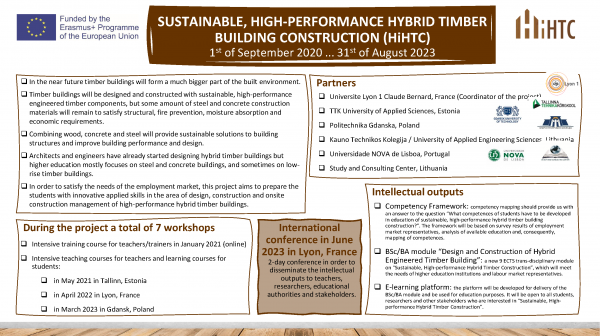
Sustainable, environmentally friendly high-performance hybrid timber building construction is at the heart of the HiHTC project. In the near future timber buildings will form a much bigger part of the EU and international built environment. Timber buildings will be designed and constructed with sustainable, high-performance engineered timber components, but some amount of steel and concrete construction materials will remain to satisfy structural, fire prevention, moisture absorption and economic requirements. Combining wood, concrete and steel will provide sustainable solutions to building structures improve building performance and design. Also, the project promotes cultural diversity and shapes professional life and society, as work environments are increasingly involve internationally networking.

Architects and engineers have already started designing hybrid timber buildings. However, now higher education mostly focuses on steel and concrete buildings, and sometimes on low-rise timber buildings. In order to satisfy the needs of the employment market, it is necessary to prepare students with innovative applied skills in the area of design, construction and onsite construction management of high-performance hybrid timber buildings. To educate a new generation of students, it is necessary to develop and integrate an innovative multi-disciplinary BSc/BA study module.

Project aims to fulfill the future demands in higher education of students in sustainable, high-performance hybrid timber building construction by transnational and trans-disciplinary innovative student-centered learning approaches dealing with changes and solving innovative complex problems will promote and strengthen global learning.

Objectives:
  • To develop and deliver new international trans-disciplinary module on sustainable, high-performance hybrid timber building construction, which meets the needs of the HEIs and employment market representatives. An internationalized curriculum will enable the students participating in the project to develop global perspectives in global environmental issues and think across cultures.
  • To improve competencies of students/teachers in problem solving and team work, innovative thinking, motivation, awareness of cross-professional project input and project management by using PBL, learning by doing and blended learning approaches.
  • To educate all participants (students, teachers, entrepreneurs) in the field of the sustainable, high-performance hybrid timber building construction.
  • To ensure open awareness of the project results to local, national, EU level and international target groups.
Reference EC Project Number 2020-1-FR01-KA203-080308
Title Sustainable, High-Performance Hybrid Timber Building Construction
Main Area

Civil Engineering

Funding Framework Erasmus+ Call 2020
Funding (€)

Total grant: 323.600 euros; grant for KTK: 51 898,00 euros

Starting date 01-09-2020
Principal Contractor Université Lyon, France
Participating Institutions

Tallinna Tehnikakorgkool, Estonia; Politechnika Gdanska, Poland; Lietuvos inžinerijos kolegija, Lithuania; Study and Consulting Center, Lithuania; Universidade NOVA de Lisboa, Portugal

Project Funding: The project is financed by the European Regional Development Fund.

Project Implementer: Lietuvos Inzinerijos kolegija HEI (hereinafter – LIK).

Brief Problem Statement: LIK is a specialised college in Lithuania that educates highly qualified specialists in the field of technological sciences, who are in demand in the Kaunas region. Compared with evaluations of other Lithuanian state colleges regarding the quality of study programmes, LIK ranks second, which indicates that LIK provides very high-quality and labour-market-valued academic services.

Despite this, all expert panels evaluating LIK’s study programmes have noted that the College needs to upgrade its infrastructure, because not all facilities meet study needs, hygiene standards, or are used efficiently. Some study programmes at LIK also lack laboratory equipment that would provide students with the necessary practical skills. Moreover, the College’s existing resources are not used efficiently because adequate conditions are not currently in place. This means that even highly-rated study programmes cannot be implemented at a high quality level due to outdated or insufficient infrastructure and laboratory equipment, and students and lecturers are not provided with conditions to study and work in a modern, needs-oriented environment.

Project Aim: To improve the quality of studies at Lietuvos Inzinerijos kolegija HEI by upgrading and acquiring new infrastructure required for the College’s study process.

Project Objective: To renovate and acquire new infrastructure necessary for the College’s study process.

Project Activities:

  • Renovation and refurbishment of premises designated for studies;

  • Acquisition of furniture and equipment required for the study process.

Target Groups:

  • Students of LIK study programmes (including Erasmus+ exchange students studying at LIK);

  • LIK academic staff.

Expected Results: During the project, it is planned to establish a Communication and Theoretical Training Centre with interactive teaching tools (an amphitheatre/streaming lecture hall, a theoretical-practical laboratory for aircraft structural and functional systems, an innovative construction technologies theoretical-practical laboratory, an electrical engineering practical training laboratory, and a theoretical-practical ideas incubator); an Open-Access Study Centre (modernising the library and establishing a technical services centre); and a Foreign Language Practical Competence Laboratory Centre. The improved study environment will allow more effective use of interactive, student-centred teaching models and methods. Students will be able to use spaces adapted both for quiet study, literature research, and individual or group creative engineering activities. Acquired missing laboratory equipment, required to develop students’ practical skills, will enable students to gain a comprehensive education that ensures high-quality practical work after graduation. Modernised study infrastructure (including the already operating Multidisciplinary Centre and the newly created Open-Access Modern Communication Technologies Centre), together with interactive study and engineering creativity promotion methods, will have a positive impact on student motivation and attract applicants to technology study programmes. By implementing the project activities, infrastructure-related problems at the College will be resolved, improving the learning environment and providing conditions to study and work in a well-equipped, needs-oriented, modern environment. Interactive, student-centred teaching methods will be used efficiently, and large lecture classes and seminars will be held in suitable auditoriums. Students will have access to the services of a modern, open library and reading room and will be able to fully utilise the College’s existing resources – including subscribed technical journals, available literature, and LIK computers. The Technical Services Centre will allow students and lecturers to use printing services quickly and efficiently. Students will be able to work on engineering project tasks in an attractive environment adapted for both individual and group creative work. New laboratories will enable the high-quality implementation of the Aircraft Mechanisms Technical Maintenance programme, started in 2016, and the electrical engineering courses, which are taken by almost all study programme students, as they will be able to acquire the necessary practical skills. The innovative construction technologies theoretical-practical laboratory, where practical tasks, research, laboratory work, and theoretical teaching will be conducted, will allow students of Construction Engineering, Road Engineering, and Heritage Structures Engineering to gain the necessary practical skills and theoretical knowledge, thereby ensuring high-quality implementation of the study programmes. Additionally, College premises will be used more efficiently, energy and water resources will be conserved, and hygiene and health standards will be observed. All of this will contribute to improving study quality at LIK, increasing student motivation to learn and develop, maintaining or growing student numbers, and enhancing the College’s internationalisation and competitiveness in the context of other technical colleges.

Planned Investment: EUR 1,020,000 including VAT

Project Extension: In response to the growing demand for engineering graduates in Lithuania, Lietuvos Inzinerijos kolegija HEI and Vilnius College of Technologies and Design (VTDK) aim to improve the quality of education for engineering graduates. For this purpose, they seek to align study programme contents, conduct joint applied scientific and experimental activities, and consolidate material and human resources. The goal of such a partnership is to create infrastructure in engineering sciences study programmes that meets modern study needs, consolidating human and material resources to mutually develop interdisciplinarity, innovation, organisation of creative workshops, and to carry out applied scientific and experimental activities. Approximately EUR 800,000 (eight hundred thousand euros) in additional funds is required to implement the partnership activities. These funds will be allocated for the acquisition of software, acquisition of laboratory equipment, expansion of physical infrastructure in engineering laboratories, and adaptation of the study environment for both team-based and individual student work. By investing the planned funds and implementing the project activities, the resources of both colleges will be consolidated, enabling the creation of infrastructure for developing practical skills of engineering graduates. Students will have broader opportunities to develop practical skills by participating in joint interdisciplinary projects and creative workshops. Students and lecturers will have enhanced opportunities to conduct applied scientific and experimental activities. In the context of improving study quality, broader opportunities for science-business cooperation will emerge, as well as opportunities for professional development of employees in enterprises and the public sector, and the application of new technologies used in practical activities within the study process. The modern study infrastructure will be used in engineering sciences study fields at both colleges: Construction Engineering, Mechanical Engineering, Electronics Engineering, Energy Engineering, and Electrical Engineering. In 2020, the Open-Access Modern Communication Technologies Centre will be integrated into the College’s Multidisciplinary Training Centre at Lietuvos Inzinerijos kolegija HEI.

Extended Project Implementer: Lietuvos Inzinerijos kolegija HEI

Extended Project Problem Statement: The lack of sufficient study infrastructure and equipment to meet current study and applied activity needs is a critical problem at both Lietuvos Inzinerijos kolegija HEI and Vilnius College of Technologies and Design (VTDK). Because of this, the colleges are not always able to provide adequate conditions for learning or applied activities necessary to ensure high-quality education. This problem is complex and causes other issues that are addressed through the project activities.

Extended Project Aim: The project aims to improve the quality of studies at Lietuvos Inzinerijos kolegija HEI and Vilnius College of Technologies and Design by upgrading and acquiring missing infrastructure required for the study process. The project seeks to create an integrated modern base for both study and practical skills development that maximally supports the achievement of study programme objectives.

Extended Project Objectives: During project implementation, it is planned to upgrade study infrastructure at Lietuvos Inzinerijos kolegija HEI and VTDK (renovating study premises at LIK and acquiring furniture and equipment for the study process at both VTDK and LIK), which will improve the learning environment and the quality of study services provided.

Project Activities

  • Renovation and refurbishment of premises designated for studies;

  • Acquisition of furniture and equipment required for the study process.

Project Target Groups: The largest group of users of LIK study infrastructure comprises LIK student groups defined in the Statute of Lietuvos Inzinerijos kolegija HEI – first-cycle Professional Bachelor’s degree students and partial study students enrolled in parts of study programmes. This also includes Erasmus+ exchange students studying at LIK, academic staff, and guests attending events and seminars at the College. In 2019, 1,361 students studied at LIK. The main target group of the additional project investments at LIK is students of the Aircraft Mechanisms Technical Maintenance study programme. In 2019, the total number of students enrolled in this programme was 144.

The study infrastructure of Vilnius College of Technologies and Design (VTDK) is used by the academic community, which includes students, lecturers, researchers, other researchers, and professors emeriti. The main target group of the additional project investments at VTDK comprises students of all study programmes – individuals studying at VTDK according to the study programmes. During their studies, students have the right to use lecture halls, libraries, laboratories, and other study equipment and tools. In 2019, 1,996 students studied at the College.

Target Groups Benefiting from Additional Project Investments:

  • 144 students of the Aircraft Mechanisms Technical Maintenance study programme at LIK (including Erasmus+ exchange students studying at LIK);

  • 8 lecturers of the Aircraft Mechanisms Technical Maintenance study programme at LIK;

  • 1,996 students of VTDK study programmes;

  • 162 lecturers of VTDK study programmes.

Expected Results: The results created through the project’s additional investments will contribute to the ability of LIK and VTDK to implement high-quality study programmes, create a modern, needs-oriented study environment, and increase the colleges’ internationalisation, competitiveness, and attractiveness, thereby enabling the training of highly qualified specialists in arts and engineering sciences.

To achieve the project’s intended goal and implement its activities, the following results are expected:

  • Better conditions for studying and working in a well-equipped, needs-oriented, modern environment;

  • Opportunities to acquire necessary theoretical knowledge and practical skills using modern laboratory equipment and contemporary didactic methods;

  • Modernised LIK Aircraft Laboratory premises/spaces adapted to current teaching and learning needs, and upgraded learning infrastructure that meets hygiene standards;

  • Improved/upgraded equipment required for the study process at both VTDK and LIK.

Project Budget:

  • The planned investment for project implementation is EUR 1,818,067.89 including VAT.
  • The project is planned to be completed by the end of July 2021.

In accordance with the provisions of the Programme for Increasing Energy Efficiency in Public Buildings, approved by Resolution No. 1328 of the Government of the Republic of Lithuania of 26 November 2014, a loan agreement for the renovation of a central government public building aimed at increasing energy efficiency was concluded. The loan agreement (No. 42/CVVP-PO81/10/F22-067) was financed from the Energy Efficiency Fund and signed between UAB Public Investment Development Agency and Lietuvos Inzinerijos kolegija HEI.

Pursuant to the loan agreement, design works were carried out (contractor: UAB Simper), as well as building renovation (modernisation) works (contractor: UAB Rekonsta).

All project activities related to the implementation of the Project and all eligible expenditures financed by the loan funds were incurred before the end of the loan utilisation period specified in the Special Conditions of the Agreement, but no later than 31 December 2023.

Following the renovation, the building was awarded Energy Performance Certificate Class C.

Lietuvos Inzinerijos kolegija HEI contributed to the implementation of this project by carrying out a study of labour market needs in the Kaunas region. The study analysed cooperation between education and training institutions and employers, and supported project partners — Ventspils Technical School — in updating the curricula for electricians and mechanical technicians based on the methodology for the implementation of modular training programmes. Students from Lietuvos Inzinerijos kolegija HEI and Ventspils Technical School were also involved in the project. Through exchange activities, they participated in various training sessions, skills competitions, and visits to industrial companies, where they had the opportunity to gain first-hand experience of the technologies used in real industrial environments.

The results developed during the project can be downloaded here:

The project “Establishment of a Multidisciplinary Practical Training Centre in the Field of Technology” implemented by Lietuvos Inzinerijos kolegija HEI for the introduction of a study services information system is carried out under Priority VP3 “Cohesion Promotion Operational Programme”, Priority Axis VP3-2 “Quality and Accessibility of Public Services: Health, Education and Social Infrastructure”, Objective VP3-2.2 “To ensure higher quality and accessibility of education and study system services by improving participation in lifelong learning for people of all age groups”, Measure VP3-2.2-ŠMM-15-K “College Infrastructure for Studies”.

Public Institution Lithuanian Business College is implementing the project “Development and Implementation of a System for the Formalisation of Competences Acquired through Non-formal Learning at West Lithuanian Business College and Partner Institutions” (No. VP1-2.1-ŠMM-04-K-03-006).

The aim of the project is to develop and implement a system for the formalisation of competences acquired through non-formal learning at West Lithuanian Business College and its partner institutions.

The project involves eight partners: Lietuvos Inzinerijos Kolegija HEI, Kazimieras Simonavičius University, Kolping College, Lithuanian Maritime Academy, LCC International University, Panevėžys College, Žemaitija College, and Klaipėda State College.

The results of the project will contribute to the implementation and improvement of study programmes delivered by the partner institutions, including Institution and Business Administration, Business Process Management, Accounting, Applied Informatics, as well as other study programmes offered by the partners.

The project is financed by the European Union Structural Funds under the Human Resources Development Operational Programme, Priority 2 “Lifelong Learning”, Measure VP1-2.1-ŠMM-04 “Improvement of the Efficiency of the Higher Education System”. The total amount of funding allocated to the project is LTL 915,386.